 Jewel Beat
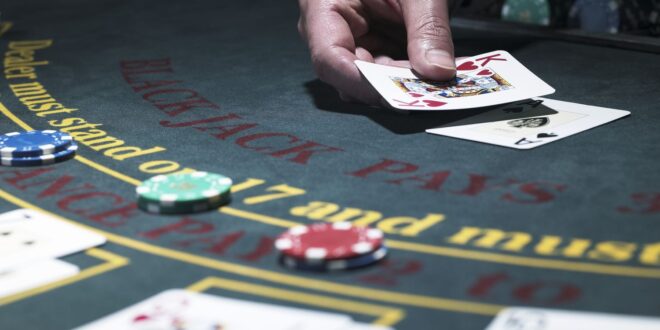
Casinos design games using strict probability and expected value. Every game has a mathematically defined structure that determines how often it pays out and how much it pays. That structure gives the house a built-in advantage. You can win in a session, even win big, but over many bets the odds favour the casino.
The reason is simply how probability works when you embed it in a game’s rules. Every casino game, from roulette to slots, is framed so the house has a predictable profit margin known as the house edge. Over time that edge guarantees a return for the casino even if individual players occasionally win.
Gambling culture differs in part by region and in part by the games people choose. Online platforms have amplified that variation. In West Africa, for example, online casino games attract many players.
In Ghanaian casino communities, sites like JackpotCity are known for a large base of local players who favour games with higher return-to-player figures and quick payouts. That matches broader patterns where players seek out games that appear to give better value on paper.
What players really face

The core concept in casino odds is the probability of each outcome and how the payout compares to that probability. Probability tells you how likely an event is. Expected value takes probability and payout size together to describe what you can expect on average when you repeat the bet many times.
In the long run, the expected value from a typical casino wager is negative for the player. That means on average the house earns money while players, as a whole, lose money.
The house edge is the simplest way casinos embed their advantage. It is the average percentage of every bet that the house expects to keep over time. On a roulette wheel, for example, the existence of the green zero pockets reduces the true odds of winning versus the payouts.
In European roulette the house edge is about 2.7 per cent, and in American roulette about 5.26 per cent. That may seem small in a single round, but over thousands of spins it adds up.
Breaking down the mathematics
Most popular games have well-documented house edges because they are based on clear probability models. Blackjack, when played with basic strategy, can have a house edge as low as around 0.5 per cent.
Baccarat banker bets are around a 1.06 per cent house edge. Slot machines vary widely, often from about 2 per cent to over 10 per cent, depending on design and volatility. Keno and some specialty games carry higher edges.
These figures don’t mean you will lose exactly that amount on every $100 you play. They describe averages over many bets. In the short term, outcomes deviate widely from the expected value because of random variance.
You can win and you can lose, sometimes dramatically more than the house edge suggests. But over time, and over many players, the casino’s edge shows up in the aggregate profits.
Where common player beliefs fall apart

Many gamblers believe in strategies that promise to beat the house. The Martingale system, for example, suggests doubling your bet after every loss so that a single win recovers all previous losses plus a profit equal to the original stake.
It sounds plausible on paper but ignores two key constraints: table limits and bankroll limits. Additionally, every bet remains independent, meaning past losses do not improve your chances of winning the next round. No betting sequence changes the underlying probability of the game.
Related to this is the idea that short winning streaks somehow shift the odds in your favour. The gambler’s fallacy is the belief that if red comes up several times in roulette, black becomes more likely next.
In fact, in games with independent events the odds remain the same each time. The odds and expected value remain unchanged by previous results, even if they seem to cluster in a pattern you have seen before.
Another widespread myth is that a “hot” machine or table is due to pay soon because it has gone long without a big win. In games driven by random number generators or independent chance events, there is no memory of past outcomes.
A slot that has not paid in a while has the same odds on the next spin as it always did. Believing otherwise confuses randomness with pattern.
Skill versus chance

Not all games are pure chance. Some, like blackjack or video poker, involve decisions that affect expected value. In blackjack, choosing when to hit, stand, split, or double down based on basic strategy reduces the house edge closer to its minimum.
If you play sub-optimally, that edge increases. That means players can influence their long-term expected loss by playing skillfully.
But even the best strategy doesn’t create a positive expected value for most casino games because the house edge remains positive.
Games like baccarat or craps have limited player choices that slightly change odds for some bets but not enough to overcome the house’s advantage.
Other games such as slots and keno are pure probability with no decision points that influence long-term expectation. The payout structure determines the house edge there.
Probability in practical terms

When you sit at a table or spin a reel, your chance of winning or losing is fixed by the rules. A coin flip bet where you get paid $1.99 rather than $2 on a win introduces a house edge despite an apparent 50 per cent win chance. It’s simple arithmetic: if the payout is less than the precise reciprocal of the win probability, the casino retains the difference.
Understanding expected value also explains why sessions vary so widely. Your personal experience might show big wins or quick losses because variance can be large.
These are short-term fluctuations around a long-term average that points back to the house edge. Players focusing only on their short sessions misunderstand what the long-term mathematics implies.
What this means for you
If you play casino games, knowing how odds and house edge work provides context. Although it won’t make losses disappear or guarantee wins, it lets you separate myths from the actual design of games.
Games aren’t built to be fair in the sense of returning exactly what players wager. They are calibrated to return a fixed percentage over many bets and many players. That is why the industry can sustain operations and why casinos stay profitable over years and decades.
Regulators in many jurisdictions now require operators to publish return-to-player figures and house edges for games.
That transparency helps informed players make choices about where to wager. But even with clear numbers, the nature of probability means that the house retains its advantage in every game offered.