 Jewel Beat
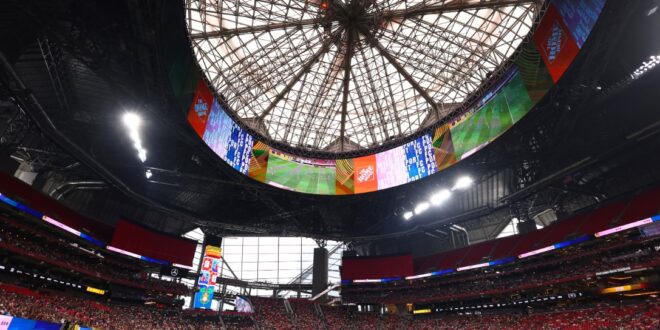
The 2026 World Cup has not been polite. It has ripped up predictions, humbled giants, and turned a few “nice stories” into proper football problems.
As of July 9, the quarterfinal lineup is France, Morocco, Spain, Belgium, Norway, England, Argentina and Switzerland, after 48 teams were cut down to eight. Some shocks feel romantic. Some failures feel expensive.
And a few games have had that lovely World Cup madness where tactics, heat, nerves and one ridiculous goalkeeper save all collide.
Why this World Cup feels so chaotic already – surprises and fails so far
The biggest reason this tournament feels so open is the new 48-team format. Reuters reported on July 3, 2026, that the expanded World Cup added a Round of 32 and allowed eight third-placed teams to advance, creating more upset paths and more strategic uncertainty. Teams are not just chasing wins anymore. They are managing legs, goal difference, bracket routes and emotional damage.
Bellow are are moments that changed how the 2026 FIFA World Cup is being discussed.
| Moment | Surprise or fail | Why it matters |
| Norway beat Brazil 2-1 | Surprise | Haaland exposed a giant |
| Germany lost to Paraguay | Fail | Another early German collapse |
| Morocco knocked out the Netherlands | Surprise | Maturity, not luck |
| USA lost 4-1 to Belgium | Fail | Host energy vanished |
| Cape Verde pushed Argentina | Surprise | Debutants played fearless |
| Portugal exited to Spain | Fail | Big names, flat rhythm |
| Switzerland reached the quarters | Surprise | Quiet tournament control |
| South Korea missed out | Fail | Three points were not enough |
| Curaçao earned a historic point | Surprise | Eloy Room stole a match |
| Brazil looked tactically flat | Fail | Talent lacked control |
For fans tracking form, odds and match momentum, platforms like IviBet now feel like another dashboard beside the live table. Not a crystal ball, obviously, but useful for seeing how quickly public confidence swings after one wild result.
Morocco and Norway stopped being underdog stories

Morocco reaching another deep World Cup phase should not be treated like a cute surprise anymore. They beat the Netherlands on penalties after a 1-1 draw, then swept past Canada 3-0 to reach the quarterfinals. The spine is calm, the wide play is brave, and the mentality is elite. Norway, meanwhile, are the thunderclap.
ABC reported that Norway reached the final eight for the first time after beating Brazil 2-1, powered by two Erling Haaland goals. At some point, “dark horse” becomes lazy. Morocco and Norway are simply dangerous.
Germany and Brazil gave us two different kinds of failure
Germany’s exit hurt because it felt familiar. UEFA lists Germany beating Curaçao 7-1, beating Côte d’Ivoire 2-1, losing to Ecuador 2-1, then going out to Paraguay on penalties after a 1-1 Round of 32 draw. That is not a disaster from minute one. It is worse. It is a team that looked fine until pressure asked sharper questions. Brazil’s fail was different. They had the forwards, the shirt, the aura. Then Norway made them look strangely ordinary. When that much talent cannot dictate tempo, it stops being bad luck and starts being structural.
Important fact: The expanded format creates more upset chances, but Reuters also noted that the longer knockout road still tends to favor traditional heavyweight teams with deeper squads.
Argentina and England are surviving, not cruising
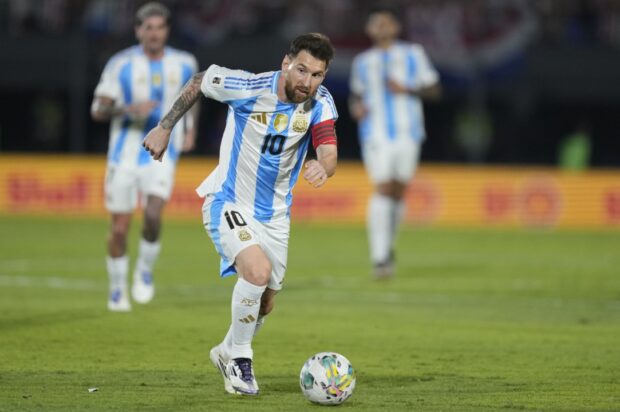
Argentina and England have both produced peak tournament chaos, the kind that makes fans age five years in one evening. Reuters reported that Argentina needed extra time against Cape Verde and then came from 2-0 down with 11 minutes left to beat Egypt 3-2.
That is champion mentality, but also a warning light. England’s 3-2 win over Mexico at the Azteca, after playing with ten men for the final half-hour, was not smooth either. Still, knockout football does not grade style. It rewards survival, nerve and moments.
Spain and Belgium are peaking in completely different ways
Spain’s World Cup is understated for a quarterfinalist. UEFA records Spain drawing 0-0 with Cabo Verde, beating Saudi Arabia 4-0, edging Uruguay 1-0, beating Austria 3-0, then eliminating Portugal 1-0. They look controlled, but not always explosive. Belgium are the opposite vibe.
Their 4-1 win over the USA suddenly made a stuttering campaign look alive again, and ABC called that performance composed, ruthless and highly impressive. Spain vs Belgium is fascinating because one side wants order, while the other just rediscovered punch.
Portugal, USA and South Korea are expectation case studies
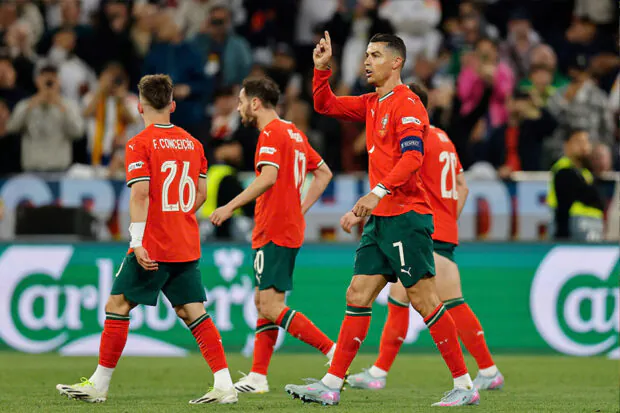
Not every fail is equal. Portugal did reach the Round of 16, but a 1-0 defeat to Spain still leaves a familiar question: did the balance of the team ever truly match the talent? The USA’s 4-1 loss to Belgium was sharper because hosts rarely get a second chance to control the national mood. South Korea’s exit was painful in a different way.
Sports Illustrated noted that South Korea finished as the 10th-ranked third-place team, with three points and a -1 goal difference, not enough to advance. That is the cruel math of this new World Cup.
The smaller nations gave the tournament its soul
Cabo Verde, Curaçao and Paraguay have reminded everyone why the World Cup still matters beyond brand value. Cape Verde took Argentina to extra time in a 3-2 Round of 32 thriller, which Reuters later framed as one of Argentina’s two major knockout scares.
Curaçao goalkeeper Eloy Room made 15 saves in a 0-0 draw with Ecuador, which Sky Sports reported as a World Cup record for saves in 90 minutes since records began in 1966. Paraguay did not just survive Germany. They broke them. That is tournament folklore.
What it all says about the 2026 World Cup so far
The best part of this World Cup is that it has not followed one simple storyline. Yes, France, Spain, England and Argentina are still there, but the road has been messy.
The 10 biggest surprises and fails of the 2026 World Cup so far point to one lesson: squad depth matters, but so do bravery, recovery, coaching clarity and emotional control. Brazil and Germany learned that reputation cannot defend transitions.
Morocco and Norway proved that belief means more when there is structure behind it. Honestly, that is why we watch every minute.