 Jewel Beat

Have you ever wondered why that final video, level, or scroll feels so much harder to turn away from than the first? Neuroscience offers a fascinating clue: your brain doesn’t just respond to rewards. It responds to the uncertainty of rewards.
Studies on dopamine, the neurotransmitter linked to motivation and learning, show that unpredictable outcomes trigger stronger dopamine activity than predictable ones, effectively reinforcing the behavior that led up to them. Researchers have repeatedly found that dopamine neurons in the midbrain react more vigorously when rewards are unexpected or variable, rather than when they are perfectly predictable, which helps explain why things that fluctuate keep us coming back for more.
That pattern isn’t a flaw in how you think. It’s part of how your brain was sculpted to learn and adapt. And when digital experiences tap into these mechanisms, the pull of “just one more” becomes almost irresistible.
The psychology behind “just one more”
At its core, the urge to continue is tied to how the brain processes anticipation. Have you ever noticed how some apps and platforms seem to pull you back in again and again? That experience isn’t by accident. Some environments are designed around unpredictable reward patterns that keep you engaged far longer than you planned to be.
For example, popular digital entertainment and gaming sites like 20Bet blend anticipation and variability in a way your brain instinctively responds to, even if you don’t consciously notice.
Dopamine is not released when we receive a reward, but when we anticipate it. Digital entertainment thrives in this space between expectation and outcome.
When an activity offers uncertain rewards, the brain stays alert. It keeps scanning for the next hit of novelty or success. This is why predictable entertainment feels boring while unpredictable content feels magnetic.
Several psychological mechanisms reinforce this loop:
- Anticipation creates more motivation than fulfillment
- Uncertainty keeps attention locked in place
- Small rewards feel more meaningful when spaced unpredictably
Once these elements combine, stopping feels harder than continuing, even when enjoyment fades.
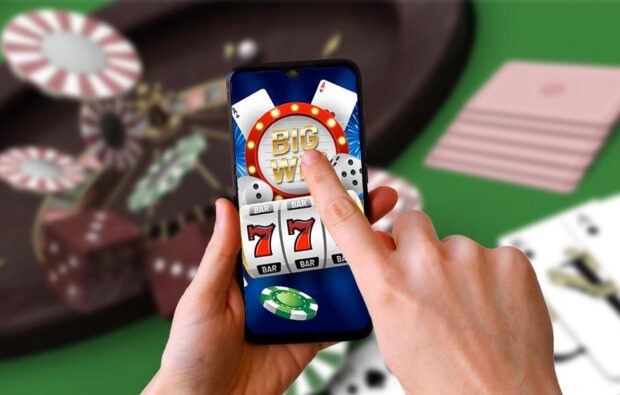
Variable rewards and why unpredictability works
One of the strongest behavioral triggers in digital entertainment is the variable reward schedule. This concept comes from behavioral psychology and has been studied for decades.
Instead of delivering consistent outcomes, platforms mix wins, near-misses, and neutral results. Your brain cannot predict what will happen next, so it keeps checking.
You see this across many formats, including casual games, short-form videos, and interactive betting environments. A platform like 20Bet works within this structure by blending anticipation, chance, and pacing in a way users intuitively understand, even if they cannot explain it consciously.
Key characteristics of variable rewards include:
- Outcomes that change each time, even with the same action
- Occasional high-value rewards surrounded by neutral moments
- Near-success signals that suggest you were close
This unpredictability trains the brain to stay engaged longer than intended.
The illusion of progress and incremental wins
Digital experiences often give the impression that you are always moving forward. Even when the actual reward is small, progress indicators make it feel meaningful.
Progress bars, streaks, levels, and percentages all signal advancement. Your brain interprets this as an investment, which makes stopping feel like losing something you already earned.
This illusion works because humans are wired to finish what they start. Once progress is visible, the desire to complete it becomes stronger than the original motivation.
Common progress cues include:
- Visual meters that slowly fill up
- Streak counters that reset if you stop
- Milestones placed just slightly out of reach
Each element nudges you to continue, not for enjoyment, but to avoid breaking momentum.

Emotional regulation through digital engagement
Digital entertainment is not only about pleasure. It often serves as emotional regulation.
People turn to screens to manage boredom, stress, loneliness, or restlessness. The content becomes a temporary stabilizer for internal discomfort.
The problem arises when the activity continues after the emotional need has been met. The brain keeps chasing the initial relief, even though the sensation has faded.
Common emotional drivers include:
- Seeking distraction from stress or worry
- Filling idle moments with stimulation
- Avoiding uncomfortable thoughts
When entertainment becomes emotional regulation, stopping feels like removing support rather than ending a pastime.
When enjoyment turns into habit
One of the most important shifts happens when enjoyment is replaced by habit. At this point, the activity no longer delivers pleasure, but it still feels necessary.
Habits form when behaviors repeat in stable contexts. Digital entertainment provides perfect conditions for this process.
Signals that habit has replaced enjoyment include:
- Continuing without clear interest
- Feeling restless when stopping
- Using the activity automatically during breaks
Recognizing this transition is the first step toward regaining control.

Creating healthier boundaries without quitting
The goal is not to eliminate digital entertainment. It is to use it consciously.
Small structural changes can restore choice without requiring willpower. The key is reintroducing friction and awareness.
Practical strategies include:
- Setting visible time limits before starting
- Turning off autoplay or infinite scroll features
- Taking short pauses between sessions
- Defining clear stopping points in advance
These adjustments work because they counter the same triggers that pull you in.
Why awareness changes behavior
Once you understand the triggers behind “just one more,” their power weakens. Awareness creates distance between impulse and action.
You begin to notice when anticipation replaces enjoyment. You recognize when fatigue drives continuation. That pause is enough to choose differently.
Digital entertainment is not the enemy. The problem arises when design-driven triggers override conscious intent.
By understanding the behavioral mechanics behind engagement, you regain authorship over your attention. The chase for “just one more” loses its urgency, and entertainment returns to what it should be: a choice, not a reflex.