 Jewel Beat

Did you know that Munich’s Englischer Garten is larger than Central Park in New York?
That fact alone tends to surprise first time visitors, especially when they realize this green giant sits right in the middle of a busy European city.
Locals treat it less like a tourist attraction and more like an extension of daily life.
Morning jogs, long bike rides, spontaneous picnics, quiet reading sessions, and lively beer garden afternoons all happen side by side.
This guide is written to help you understand how the park actually works on the ground.
Instead of rushing from one “must see” spot to another, you will get a feel for its rhythm, its different personalities, and the small corners that most guides rush past.
Understanding the Size and Structure of Englischer Garten
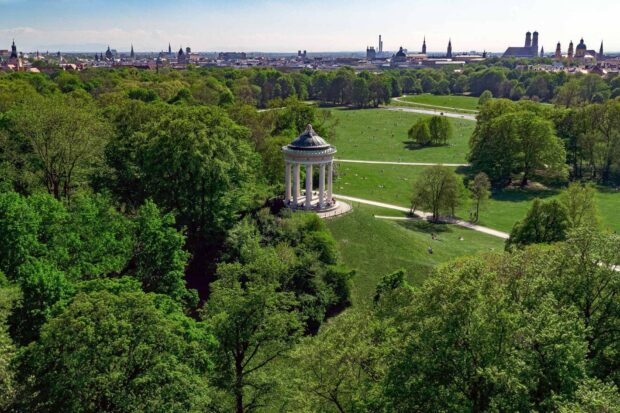
Englischer Garten Munich stretches from the city center all the way to the northern districts, and that scale shapes how people experience it.
The southern part feels lively and social, while the northern areas grow quieter and more reflective.
Before diving into specific spots, it helps to understand that this park is not one single experience but several connected zones that shift in mood as you move through them.
This gradual transition is intentional.
Designed in the late 18th century as a public space for all social classes, the park was meant to feel open and natural rather than rigidly planned.
Wide paths flow into narrower trails, open meadows fade into wooded areas, and busy gathering points slowly dissolve into calm spaces.
Many visitors underestimate distances here, so planning even loosely makes the visit far more enjoyable and less rushed.
Southern Entrance and the Social Core
The southern entrance near Odeonsplatz is where most first time visitors step into Englischer Garten Munich, and it immediately feels energetic.
This part of the park is full of cyclists, walkers, musicians, and people meeting friends after work. It is also where the park blends most clearly with city life, making it a natural place to start exploring.
Not far from this area, the Eisbach stream creates one of Munich’s most unexpected sights.
Locals gather along the bridge to watch surfers tackle the standing wave, rain or shine.
Nearby paths are perfect for people watching, and the grassy banks are popular for relaxed afternoons. It is also in this lively southern zone where people often combine a park walk with other urban plans, whether that is dinner nearby or a more adult oriented evening.
For some, that might include browsing local nightlife options or services like escort München for private arrangements later in the night, blending daytime calm with Munich’s after dark offerings in a natural, unforced way.
Eisbach Stream and the Famous Surfers
The Eisbach is one of the most photographed features of Englischer Garten Munich, but seeing it in person feels different.
The sound of rushing water cuts through the park, and the surfers create a constant point of motion that draws attention without feeling staged. It is a rare place where spectatorship feels organic rather than touristy.
What makes this spot special is how naturally it fits into daily life.
People stop for a few minutes, watch a wave or two, then continue their walk.
Others stay longer, sitting along the stone edges and talking quietly. If you plan to spend time here, a few things are worth keeping in mind:
- Early mornings are calmer and better for photos without crowds
- Weekends bring more spectators and a louder atmosphere
- Surfing here is strictly for experienced surfers due to strong currents
This balance of excitement and normalcy defines much of the park’s charm.
Central Meadows and Open Green Spaces
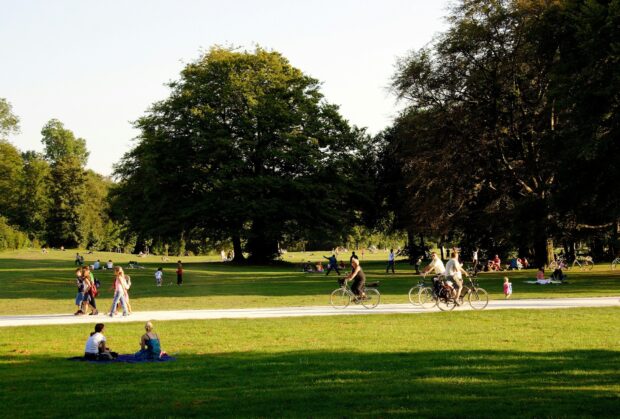
Moving deeper into the park, the central meadows open up and create a completely different feeling.
These wide grassy areas are where Munich seems to collectively exhale.
People spread blankets, play casual sports, read books, or simply lie in the sun without any sense of being rushed.
To give you a clearer overview, here is how some central zones differ in use and mood:
| Area | Typical Activity | Atmosphere |
| Schwabinger Bach banks | Sunbathing, quiet chatting | Relaxed and informal |
| Large open meadows | Picnics, games, group hangouts | Social but unstructured |
| Tree lined edges | Reading, resting | Calm and shaded |
What stands out is how unregulated it feels. There is space to exist without instruction, which is increasingly rare in major cities. This is where many visitors end up staying longer than planned.
The Chinese Tower and Beer Garden Culture
No guide to Englischer Garten Munich would be complete without the Chinese Tower area, yet it deserves more than a quick mention.
The tower itself is visually striking, but the surrounding beer garden is where the experience truly unfolds.
Long wooden tables encourage shared seating, conversation, and a slow pace that contrasts nicely with the city outside the park.
This area tends to be lively from late morning onward, especially in warmer months.
Families, tourists, and locals mix naturally, and no one feels out of place.
Traditional Bavarian food, cold beer, and shaded seating create a setting that invites lingering rather than rushing through.
Did you know?
The Chinese Tower beer garden can seat over 7,000 people, making it one of the largest in Bavaria, yet it rarely feels overwhelming because of the surrounding open space.
If you want atmosphere without chaos, arriving slightly earlier in the day usually hits the sweet spot.
Northern Sections and Quieter Paths
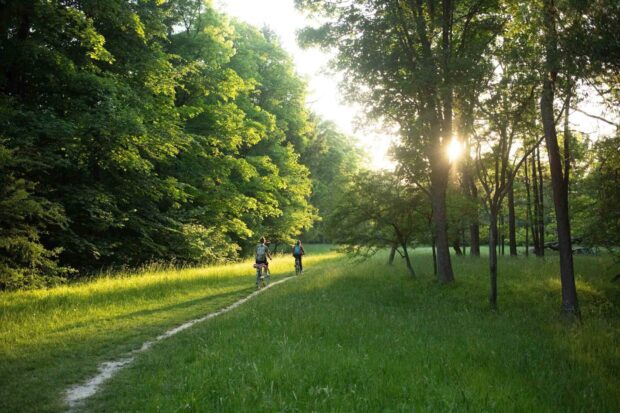
As you move north, Englischer Garten Munich gradually sheds its crowds.
The paths narrow, the sounds soften, and the park begins to feel almost countryside like despite still being within city limits.
This is where locals come to think, walk dogs, or cycle longer distances without interruption.
The northern areas reward slower exploration. Instead of landmarks, you will find subtle pleasures such as small bridges, quiet water channels, and benches positioned for long pauses.
It is not unusual to walk for ten minutes without passing another person, which can feel almost surreal in a city of Munich’s size.
These sections are ideal if you want to reset mentally or escape noise without leaving town.
Bringing a book or simply walking without a set route works especially well here.
Hidden Corners Most Visitors Miss
Beyond the obvious routes, Englischer Garten Munich hides small pockets that many visitors never notice.
These are not marked attractions but rather spaces that reveal themselves if you wander slightly off the main paths.
Small clearings near the streams, lesser known footbridges, and tucked away grassy bends offer moments of privacy even on busy days.
One particularly overlooked aspect is how sound changes in these corners.
The city fades, replaced by water movement and wind through trees.
That sensory shift is often what makes people fall in love with the park on a deeper level.
These hidden areas are best found without a strict plan. Allow yourself to follow curiosity rather than maps.
That approach almost always leads to a more personal experience of the park.
Practical Tips for a Better Visit
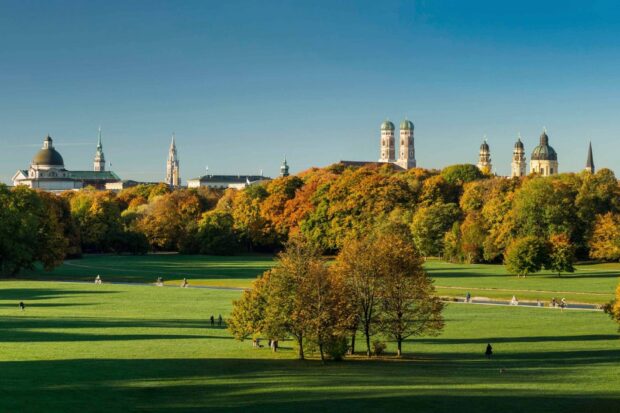
A few practical choices can dramatically shape how you experience Englischer Garten Munich.
Timing, footwear, and expectations all matter more here than at smaller parks.
Consider these simple but effective tips:
- Rent a bike if you want to see multiple zones in one visit
- Bring cash for beer gardens, as cards are not always accepted
- Respect quiet areas, especially in the northern sections
- Do not underestimate walking distances
The park rewards patience. Trying to “do it all” in one visit often leads to fatigue rather than enjoyment.
Treat it like a place to return to, not conquer in a single afternoon.
Why Englischer Garten Feels So Personal
What sets Englischer Garten Munich apart is not just its size or features, but how naturally it integrates into daily life. It does not ask visitors to behave in a certain way or follow a specific route.
Instead, it adapts to whatever you bring into it, energy, solitude, curiosity, or rest.
People remember this park not because of one iconic photo, but because of how it made them feel while they were there.
A slow walk, a quiet bench, a shared table, or a surprising moment by the water often becomes a lasting memory.