 Jewel Beat

More than 70 percent of recreational bettors report that their biggest losses came during short emotional stretches, not from one catastrophic wager. That pattern tells us something important. Most financial damage in sports betting is behavioral and structural, not mathematical.
If you are serious about long-term results, bankroll management is not optional. It is the framework that keeps variance from overwhelming your decision-making. It does not promise profit. It does not create an edge. What it does is reduce volatility impact and protect you from self-inflicted mistakes.
This guide breaks down bankroll management in a structured, realistic way. No hype. No shortcuts. Just disciplined capital control designed for sustainability.
What Bankroll Really Means
Before talking about staking systems or variance, it helps to define the foundation clearly.
A bankroll is pre-allocated, fully disposable betting capital. It is not your savings account. It is not rent money. It is not emergency funds. It is a fixed amount you can afford to lose without affecting your financial stability.
When bettors mix personal finances with betting funds, several risks emerge:
- Emotional distortion increases because losses feel personal
- Stakes become inconsistent when financial pressure rises
- Decision quality declines after short-term drawdowns
Separating betting funds from personal accounts creates psychological distance. It also allows objective tracking. If you deposit into a regulated platform and decide to manage your activity there, many bettors choose established operators such as 20Bet.
Why Variance Matters More Than Most Bettors Think

Variance is simply the difference between expected outcomes and actual short-term results. Even if you consistently make positive expectation bets, outcomes can cluster unpredictably.
Consider a bettor with a small edge who wins 55 percent of even money bets. Over thousands of wagers, the edge may materialize. Over 50 bets, the results can swing dramatically.
Variance does not mean your strategy failed. It means probability is unfolding over time.
Short losing streaks do not invalidate a model. Short winning streaks do not confirm skill. The misunderstanding of variance is what causes emotional overreaction.
A bettor with a 5 percent theoretical edge can still experience 10 or more consecutive losses within a normal probability range.
Understanding variance encourages patience. It also explains why bankroll management is not about winning faster. It is about surviving statistical noise.
Long Term vs Short Term Outcomes
Short-term results are dominated by randomness. Long-term results are shaped by expectation and discipline.
In the short term:
- Small samples exaggerate luck
- Confidence swings quickly
- Risk-taking behavior increases
In the long term:
- Edges compound gradually
- Volatility smooths out
- Discipline outweighs emotion
The problem is psychological. Humans’ recent results are overweight. Behavioral finance calls this recency bias. When bettors increase stakes after a hot run or panic after a cold stretch, they amplify variance instead of absorbing it.
Bankroll management exists to stabilize behavior during short-term turbulence. It does not change the math. It changes your exposure to it.
Unit Sizing and Percentage-Based Betting
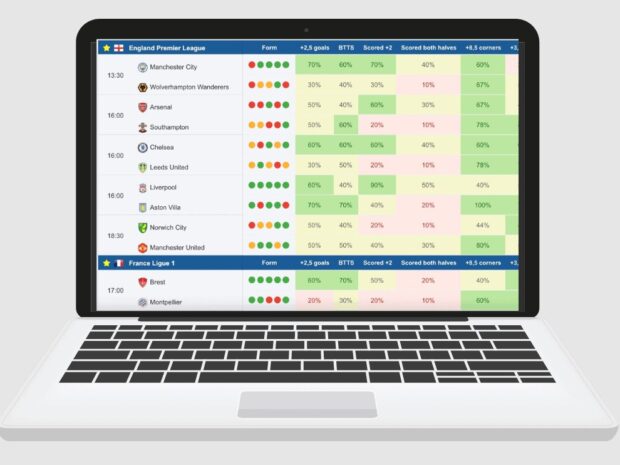
Stake sizing is where theory meets execution. The goal is not to maximize growth at all costs. The goal is to protect capital from rapid drawdowns.
Two common approaches are flat staking and percentage staking.
| Approach | Description | Risk Profile |
| Flat Staking | Same unit size per bet | Stable but slower adjustment |
| Percentage Staking | Fixed percent of bankroll per bet | Adaptive but sensitive to volatility |
Flat staking simplifies decision-making. You define one unit, perhaps 1 to 2 percent of your bankroll, and keep it constant. This reduces emotional fluctuation.
Percentage staking scales with your bankroll. As your balance decreases, so does your stake. This naturally limits compounding losses.
No model is universally superior. The key principle is consistency. Sudden stake changes driven by emotion undermine both methods.
Consistency as a Defensive Tool
Many bettors underestimate how quickly a bankroll can erode when stakes fluctuate.
Suppose a bettor risks 5 percent of their bankroll per wager. A short 10-loss streak reduces capital by nearly 40 percent. Recovery then requires disproportionately higher returns.
Lower unit sizes, typically 1 to 3 percent, reduce the impact of inevitable losing streaks. This protects your ability to stay in the game long enough for any statistical edge to matter.
A simple internal rule can help:
- Define unit size before the season starts
- Avoid increasing stakes after wins
- Avoid doubling stakes after losses
- Recalculate only after a defined sample size
Consistency is not conservative for its own sake. It is a volatility buffer.
Common Bankroll Mistakes

Most long term failure is not due to poor prediction models. It stems from behavioral errors.
Chasing losses is the most common mistake. After a losing streak, bettors increase stakes to recover faster. This compounds risk precisely when emotional stability is lowest.
Overexposure on a single event is another issue. Placing multiple correlated bets on the same match increases hidden risk. A single unexpected outcome can damage several positions simultaneously.
Increasing stakes after wins also distorts discipline. Winning streaks often create overconfidence. Larger bets follow, exposing the bankroll to larger variance swings.
Emotional betting, especially on favorite teams, introduces bias. Emotional attachment weakens objective probability assessment.
Each of these behaviors amplifies variance instead of managing it.
Stop Loss, Stop Win, and Session Limits
Stop loss and stop win rules are often misunderstood. They do not change your mathematical expectation. They are behavioral control mechanisms.
A stop loss limits daily or weekly exposure. Once the threshold is reached, betting stops. This prevents escalation after frustration.
A stop win cap limits excessive risk-taking after success. Many bettors increase aggression after a profitable session. A cap prevents overextension.
Session limits also reduce fatigue-driven errors. Decision quality declines when attention wanes.
There is no statistical magic in stopping after three losses or five wins. The benefit lies in preventing emotional spiral patterns.
Used correctly, these tools moderate volatility-driven behavior.
Realistic Expectations for Long-Term Results

Bankroll management does not generate profit. It preserves capital. Profit requires a genuine analytical edge over the market.
If your strategy has a negative expectation, disciplined staking will slow losses, not eliminate them.
If your strategy has a small positive expectation, disciplined staking allows that edge to compound gradually.
Long-term betting growth is typically linear and slow. Exponential growth requires either high-risk exposure or a significant edge, both rare.
Sustainability is the real objective:
- Preserve capital during downswings
- Maintain emotional stability
- Allow sufficient sample size
- Avoid catastrophic drawdowns
Fast growth narratives are appealing. They are also statistically fragile.
Measured progression is structurally sound.
Putting It All Together
Effective bankroll management rests on three pillars: separation of funds, consistent unit sizing, and behavioral discipline.
There will always be risk in sports betting. Probability distributions do not bend to confidence. Markets remain efficient and competitive.
Bankroll management does not promise certainty. It does not eliminate volatility. What it does is create a controlled environment in which rational decision-making has space to operate.
In the long run, survival precedes growth. If your capital remains intact and your decisions remain disciplined, you give any genuine edge a chance to manifest. Without structure, even strong analysis collapses under emotional pressure.