 Jewel Beat
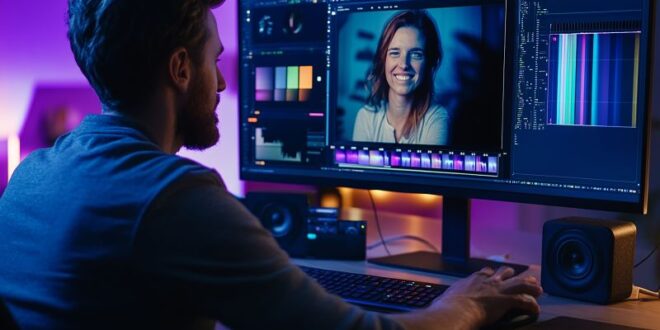
AI’s a practical part of video creation now. Used to need several software tools, detailed editing knowledge, hours of manual work. Increasingly, AI-assisted workflows just handle it. Generating visual concepts, organizing clips, creating effects – changing how creators approach the whole thing, from the first idea to the final export.
Growing interest here ties to systems reading text instructions, turning them into useful creative output. Beginners, easier entry point. Experienced creators, faster through the repetitive parts. Neither group has to give up control to benefit from it, either — the tools mostly sit alongside the usual editing process rather than replacing it outright.
What Is an AI Video Editor?
AI assisting with one or more parts of video production. Trimming footage, generating captions, removing backgrounds, improving audio, visual effects, turning written instructions into creative content — depending on the platform.
Traditional editing — manually locating clips, arranging on a timeline, adjusting transitions, modifying elements one by one. AI-assisted editing cuts a lot of that manual work. Interprets what the user’s actually going for, then produces a rough version to work from.
Not replacing the editor, though. Another creative tool, really. Person still decides the story, the footage, the tone, whether it all actually communicates something worth watching. The AI can generate options fast, but somebody still has to pick which option’s actually right for the project.
How Chat-Based AI Can Support Video Creation
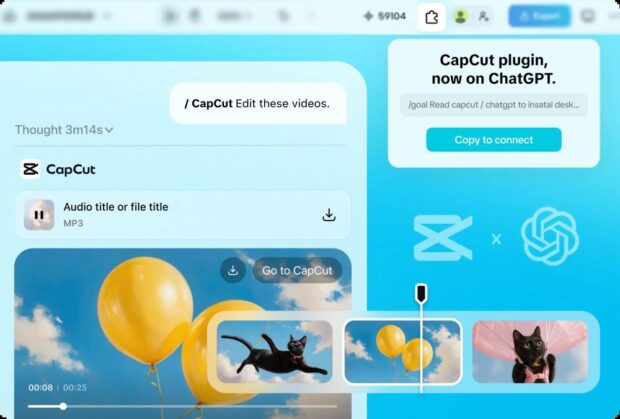
Big development — conversational AI meeting creative software. Instead of menus and complicated controls, describe what you want in plain language, and the system attempts to translate that into action.
Someone building a short social video, needs several clips organized into a sequence. Conversational AI workflow translates that general idea into editing instructions, creative suggestions. Instead of hunting through submenus for the right transition or effect, the creator just says what they’re picturing.
People exploring a ChatGPT video editor free workflow, curious how conversational AI connects with video-production tasks. Broader idea — natural-language instructions make creative software easier for people unfamiliar with advanced editing interfaces. That accessibility matters a lot for anyone who’s tried and abandoned a traditional editor because the learning curve felt too steep.
Still worth reviewing results carefully, though. Automated tools misread instructions sometimes. Pick an unsuitable visual. Produce something that doesn’t match the pacing you wanted. Treat the first output as a draft, not a finished product, and the workflow holds up a lot better.
AI-Generated Images and Video Projects

Images matter a lot here too. Backgrounds, concept art, thumbnails, illustrations, other visual elements — before a video’s even finished, a creator often needs several of these just to plan things out.
Text-to-image, describe a concept, get an image. Genuinely useful brainstorming, experimenting with ideas without producing final artwork by hand first. A creator can try five different visual directions in the time it used to take to sketch one.
GPT Image 2.5, good example of the broader trend — generative image tech meeting digital creative workflows. Generated images become starting points for video scenes, promotional graphics, storyboards, other visual content, depending on the tool and how it’s set up to handle follow-up edits.
Quality still depends heavily on the prompt, what the system can actually do. Several attempts sometimes, before landing on something that fits. Vague descriptions tend to produce vague, generic results, while specific details about lighting, composition, and mood usually get you somewhere closer to what was actually pictured.
Benefits for Beginners
AI-assisted editing cuts the technical barrier. Beginners experiment more easily, not needing every editing function memorized first. That alone gets more people actually finishing projects instead of giving up partway through.
Automated captions, good example. Instead of typing and syncing every sentence manually, AI generates a preliminary transcript. Creator checks it, fixes it. What used to take an hour of careful timing now takes a few minutes of proofreading.
Background removal, audio enhancement, scene organization, visual effects — common applications. Saves time on the repetitive stuff. Lets creators focus more on storytelling, which is usually the part that actually matters to an audience anyway.
Beginners should still learn basic editing principles, though. Not lean entirely on automation. Pacing, composition, audio balance, transitions, visual continuity — matters regardless of the tech underneath. A tool can execute a decision faster, but it still needs a person to make the decision in the first place.
Considerations When Using AI Tools
AI-generated content always needs review before publishing. Generated visuals carry unexpected details sometimes. Automated captions misread names, technical terms, accents — small errors that can look sloppy or even change the meaning of a sentence if nobody catches them.
Copyright and licensing worth thinking through too. Image, video, voice, other asset gets generated or downloaded – doesn’t automatically mean fine for every commercial or personal use. Terms vary a lot between platforms, and assuming otherwise can cause real problems down the line.
Privacy matters as well. Understand what a creative platform actually processes. Avoid uploading sensitive material unless you’re comfortable with the terms and protections in place, especially footage involving other people who haven’t agreed to have their likeness processed by an AI system.
The Future of AI-Assisted Video Creation
AI’s probably getting more integrated into video-production software over time. Not a separate feature — assistance showing up throughout the process. Planning, asset generation, captioning, final adjustments, all connected instead of scattered across separate tools.
Most useful approach, treating these as creative assistants. Not replacements for human judgment. AI generates possibilities, cuts repetitive work. Creator stays responsible for the message, accuracy, style, final quality — the parts that actually require taste and context, not just execution.
As this tech keeps developing, video creation’s probably getting more accessible across different skill levels. Fundamental goal stays the same, though — using visual and audio elements to actually communicate something, whether that’s done with a full production team or one person and a laptop.