 Jewel Beat

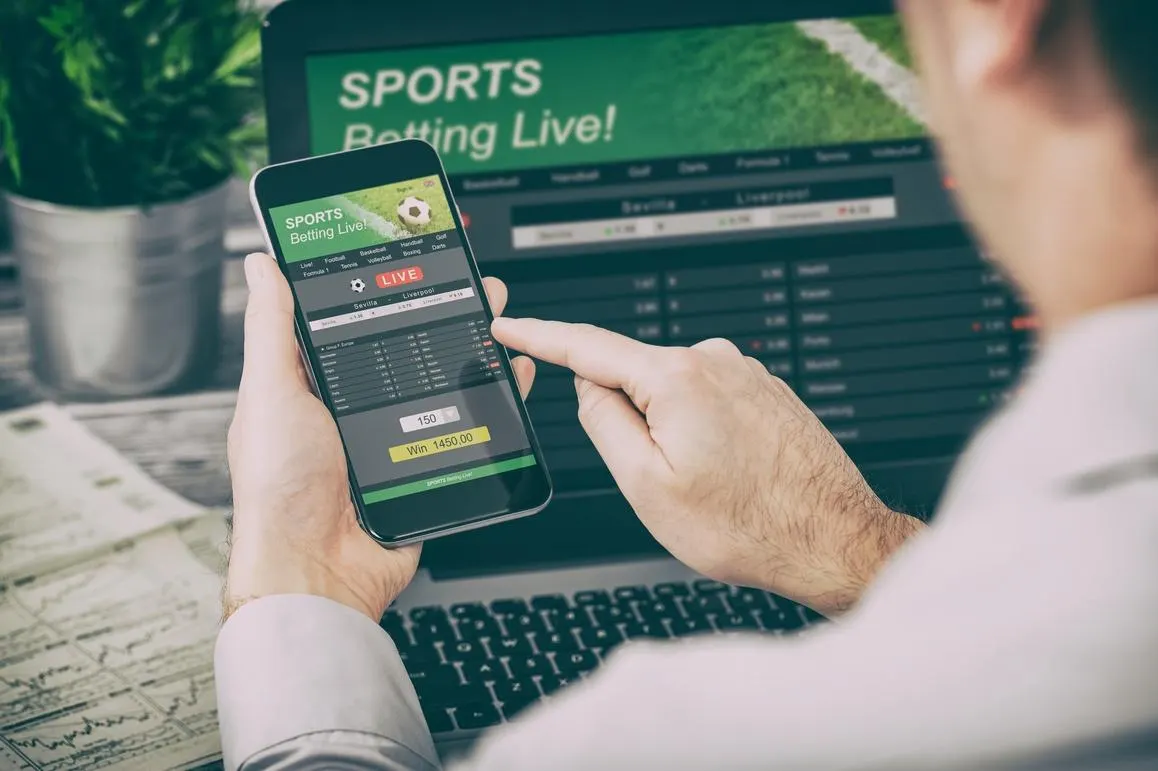
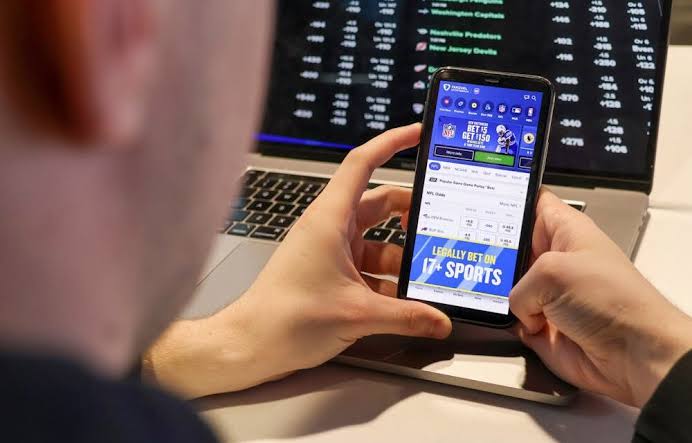
Somewhere in the second quarter of 2026, live betting quietly crossed a line that would have sounded absurd a decade ago: it now accounts for 57% of all US sportsbook handle, according to industry tracking published in August 2026. Not as a niche add-on to the “real” pre-game market, but as the main event. A decade ago, in-play betting on a US sportsbook app usually meant one crude halftime line. Now it means hundreds of markets that reprice every couple of seconds, tied directly to what just happened on the field.
I think this is one of the more underappreciated shifts in how people actually consume sport – arguably more consequential to the in-the-moment experience of watching a game than any streaming platform launch of the last five years. Streaming changed where you watch. Live betting has changed how closely you watch, what you watch for, and how many screens you’re doing it on.
From Halftime Novelty to Every-Snap Odds
The mechanical shift behind live betting is less about gambling and more about plumbing. A modern in-play market depends on a data pipeline that starts with a scout or sensor in the stadium, runs through a rights-holding data provider, and lands on a pricing engine that recalculates odds continuously rather than once per market. Providers like Genius Sports hold official data rights for the NFL, NBA, MLB and PGA Tour, and Sportradar covers a comparable footprint across European football and tennis – that official-data head start reportedly shaves 200 to 400 milliseconds off the observation step compared with unofficial feeds, which sounds trivial until you remember the whole pricing chain is supposed to run in under 200 milliseconds end to end.
What that buys the bettor is not a smoother experience so much as a faster-moving one. On a typical NFL broadcast, a live market gets suspended – frozen, not zeroed – on roughly 30 to 60% of snaps, because the risk engine won’t quote a price while a play, injury review, or scoring event is unresolved. The bet slip still accepts your tap during that window; it just queues until the market reopens and the engine decides whether your screen price still holds.
An independent tracking exercise by Tech Insider, which timed 410 live wagers across the eight largest US-regulated sportsbooks over the 2025–26 NFL, NBA, and college basketball seasons, put some real numbers on how that plays out operator by operator:
| Sportsbook | Median bet-acceptance time | Rejection rate | Median market suspension |
|---|---|---|---|
| FanDuel | 1.4s | 3.1% | 11s |
| DraftKings | 1.7s | 3.9% | 12s |
| BetMGM | 2.0s | 5.2% | 14s |
| Caesars Sportsbook | 2.1s | 4.7% | 13s |
Source: Tech Insider’s 2025–26 season tracking of 410 live wagers across US-regulated sportsbooks, published May 2026.
Look at the spread: nearly a full second separates the fastest and slowest books on that list, and the rejection rate roughly doubles across the same range. That gap is the whole product, distilled into two columns.
Why Is Everyone Watching With a Phone in Hand?
Because most fans already were, and betting simply gave the habit a reason to stick around. eMarketer forecasts that 216.8 million US adults – 80.6% of the population – will use a smartphone as a second screen in 2026, and among 18- to 34-year-olds streaming live sport specifically, 58% now do it with a second screen going at the same time. Basketball fans are the most stat-hungry group of all: a YouGov survey found 70% of them look up numbers mid-game, ahead of soccer (68%) and football (63%) fans, and 54% of sports fans overall say real-time stats genuinely improve the experience rather than distract from it.
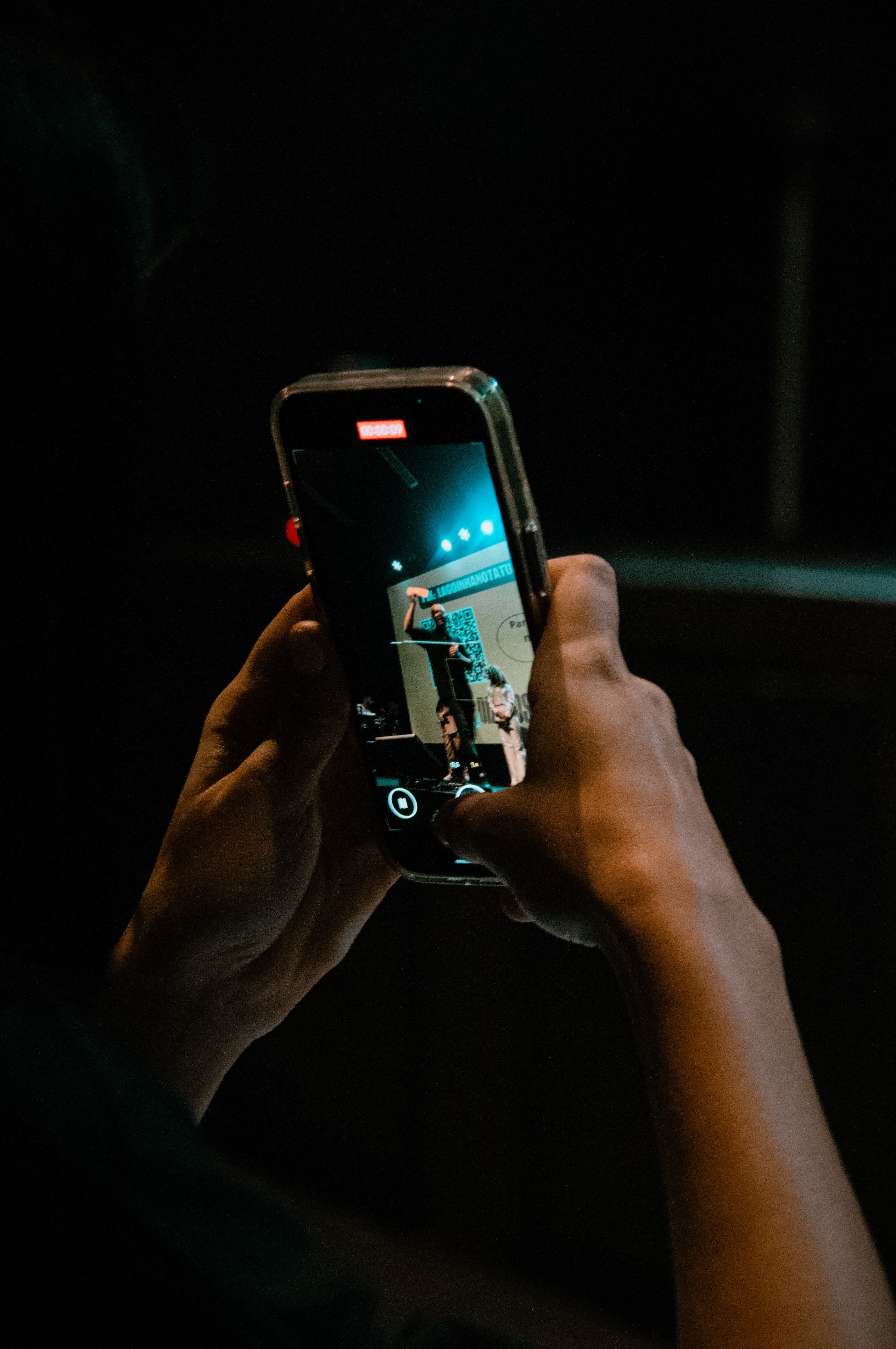
The 2026 FIFA World Cup made the pattern almost comically visible: with scheduled water breaks built into the 22nd minute of each half, a Snapchat-commissioned study found 74% of Gen Z fans are likely to reach for their phone the moment play pauses, and fans check their phones roughly ten times per match on average – not out of boredom, but because the phone has become part of how the match is followed, not a break from it.
My read is that the two-screen habit isn’t reversing, whatever you think of it. You can find the water-break statistic mildly depressing and still have to plan a broadcast, a stadium network, or a betting product around the fact that it’s true.
The Market Is Bigger Than It Looks – and Nobody Agrees on the Number
Here’s an honest wrinkle worth flagging rather than smoothing over: market-research firms covering “live betting” in 2026 disagree with each other by more than two times. One report sizes the global live betting market at $43.7 billion in 2026; another puts the 2025 baseline at $28.4 billion; a third estimates just $19.15 billion for 2025. All three agree the category is growing at roughly 11–13% a year, but the base number swings wildly depending on what counts as “live betting” and which regions get folded in. Treat any single headline figure from this space as directional, not precise.
The more reliable numbers come from regulatory reporting rather than market-research modeling. The American Gaming Association’s Q1 2026 commercial gaming report showed live handle overtaking pre-game handle in the US for the first time on record:
| Quarter | Pre-game handle | Live handle | Live share |
|---|---|---|---|
| Q1 2024 | $22.1B | $14.1B | 39.0% |
| Q1 2025 | $23.4B | $18.6B | 44.3% |
| Q4 2025 | $24.8B | $22.7B | 47.8% |
| Q1 2026 | $23.9B | $27.1B | 53.1% |
Source: the American Gaming Association’s Q1 2026 handle report, released April 10, 2026.
Globally the picture is similarly lopsided by region. H2 Gambling Capital and the International Betting Integrity Association put in-play wagering at 47% of global online sports bets in 2024, with Europe (54%) and North America (53%) already past the halfway mark, while Asia-Pacific sits at just 20% – largely because Australia still prohibits online in-play betting outright, on the explicit grounds that it’s a higher-risk product. That regulatory split, between markets racing to build faster live betting and one major market banning it, is itself worth sitting with for a second.
The Stadium Had to Get Faster Too
None of this works if the venue can’t move the data. Verizon expects fans at 2026 FIFA World Cup host stadiums to burn through more than 50 terabytes of data per match – roughly the equivalent of three years of continuous HD streaming – and has boosted 5G capacity three-to-fivefold across those venues accordingly. Los Angeles FC’s BMO Stadium became one of the first Major League Soccer venues to deploy Wi-Fi 7, and according to a 2025 Verizon survey of stadium operators, 51% of venues already run a private 5G network, mostly for back-of-house operations and security rather than fan-facing features (yet).
The economics behind that spending aren’t sentimental. A stadium with unreliable Wi-Fi doesn’t just annoy fans trying to post a highlight – it caps in-venue live betting, mobile ticketing, cashless concessions, and every other revenue line that depends on a phone actually connecting. The network stopped being a nice-to-have around the same time live betting stopped being a novelty, and that’s not a coincidence.
The Data Nobody Puts in the Ad
Here’s where I’d push back on how this category usually gets marketed. In-play betting is sold as the most exciting way to watch a game – and mechanically, it is. But a run of peer-reviewed studies, from three different countries, keeps landing on the same uncomfortable finding: a 2020 study of Australian sports bettors found that people who bet in-play scored an average of 8.76 on the standard Problem Gambling Severity Index, versus 3.68 for those who didn’t – and were roughly three times more likely to meet the threshold for a gambling problem, even after controlling for how much they gambled overall. A separate Ontario study of 920 sports bettors found in-play bettors reported significantly higher problem-gambling severity and broader harms (financial, relationship, health) than single-event or traditional bettors, who barely differed from each other. A third study on the cash-out feature specifically found that of the 51.8% of in-play bettors who used it, users reported meaningfully higher rates of depression, anxiety, and problematic substance use than non-users.

To be fair to the research itself: none of these studies prove causation. It’s entirely plausible that people already prone to problem gambling are simply drawn to the fastest, most continuous betting format available, rather than the format itself creating the problem. The researchers say as much. But the same association shows up in Australia, Canada, and Spain, across teams that weren’t working together, using different methodologies – and that kind of independent replication is exactly what should make you take a correlational finding seriously even without a randomized trial to nail down cause and effect.
So Which Screen Are You Actually Watching?
So here’s the actual choice in front of most fans now, and it’s worth stating plainly rather than dancing around it: do you want the broadcast to be the whole experience, or do you want a second layer of live odds, stats and stream running underneath it? Neither answer is wrong, but they’re increasingly different products. Platforms like IviBet have leaned into the second version, pairing an in-play sportsbook with live streaming and real-time statistics on the same screen, on the logic that fans don’t want to tab-switch between the game and the market anymore – they want both in one place.
That convergence is genuinely useful if you’re a fan who already bets and wants less friction. It’s also exactly the design pattern the research above is describing as higher-risk: fast decision cycles, continuous availability, no natural pause between the emotional peak of a play and the next bet slip. If you’re going to use a live betting product, the boring advice is also the correct one – set a deposit limit before kickoff, not during the third quarter when you’re already emotionally invested in the outcome.
What This Actually Changes Going Forward
The interesting thing about the live betting boom isn’t the betting, exactly – it’s that it forced an entire technology stack to be rebuilt around a single constraint: how fast can information move from the field to a person’s hand. Broadcast delay, stadium bandwidth, official data rights, market-suspension logic – every piece of that stack now gets judged on the same metric a decade of streaming wars never quite settled on: latency to the fan, measured in milliseconds, not minutes.
If there’s one thing worth carrying out of this piece, it’s that the “second screen” stopped being a side habit a while ago. For a large and growing share of fans, it’s become the primary way the game is actually consumed – the broadcast is now the backdrop, and the phone is where the game is being followed. Whether that’s an improvement or a loss probably depends on which fan you ask, and possibly which quarter you ask them in.
How this article was put together. Handle and market-share figures come from the American Gaming Association’s Q1 2026 report and H2 Gambling Capital / International Betting Integrity Association global modeling, both checked in August 2026. Second-screen behavior data draws on eMarketer, YouGov, and a Snapchat-commissioned OnePoll survey tied to the 2026 FIFA World Cup. Stadium connectivity figures come from Verizon’s public World Cup infrastructure announcements and its 2025 Stadium Connectivity Outlook Survey. The problem-gambling research section is drawn from three peer-reviewed studies published in Frontiers in Psychiatry, a Canadian sample reported via PMC, and a cash-out-specific study in a peer-reviewed addiction journal – all correlational, none establishing causation, as noted in the text. Commercial market-size estimates vary significantly between research firms and are presented as a range rather than a single figure for that reason. Recheck the handle-share numbers once AGA’s Q3 2026 report lands.